
There’s a moment somewhere between the airport and Þingvellir where your brain just gives up trying to make sense of what it’s seeing. No trees. No strip malls. No billboards. Just miles of black lava rock carpeted in moss so green it looks fake, and a road cutting straight through it like someone hit “generate terrain” and forgot to add the rest of civilization. I’ve played enough open-world games to recognize the feeling: this is what it looks like when the map hasn’t loaded yet. Except it had. This was Iceland, and it actually looks like this.
The first stop on my itinerary was the Blue Lagoon. If you’ve looked up Iceland for more than five minutes, you’ve probably seen it. Milky blue water. Steam rising into the air. People floating around looking like they just discovered the secret to happiness.
I wasn’t convinced.
The drive there didn’t help. Leaving the airport, I found myself surrounded by black lava fields covered in moss and almost nothing else. Then came construction equipment. Cranes. Barriers. More construction. For a moment, I wondered if I’d fallen for good marketing and expensive Instagram photos. This was supposed to be one of Iceland’s most famous attractions, but my first impression felt more industrial than magical.
Then I walked inside.
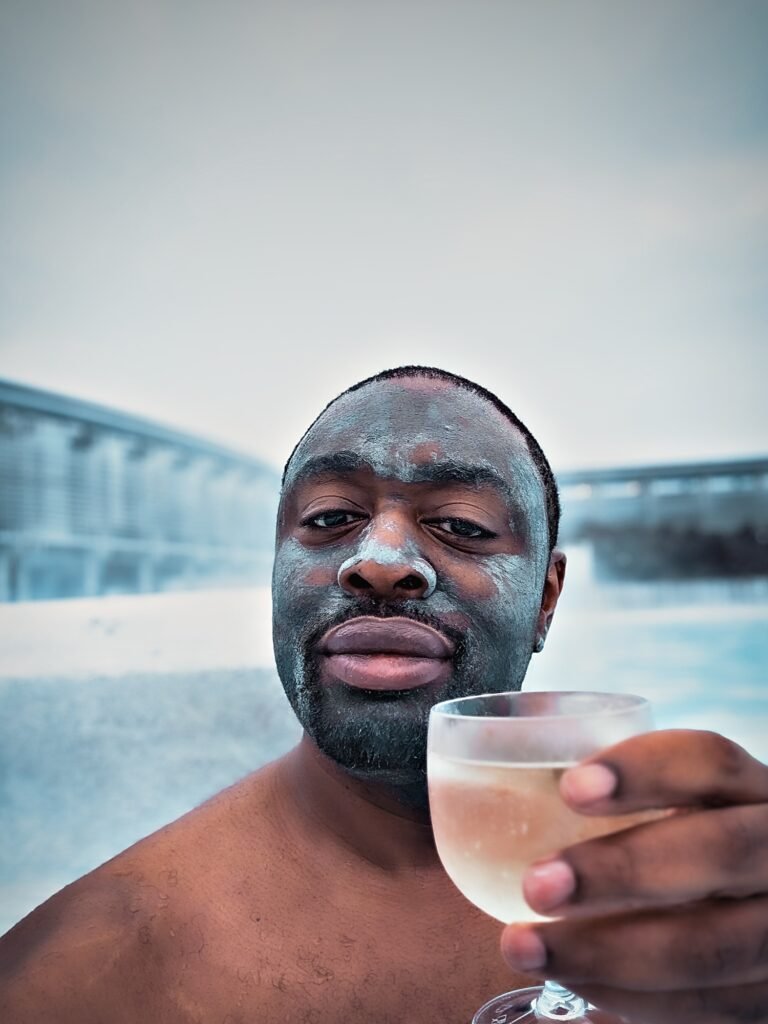
The funny thing about Iceland is that it keeps making you question your expectations. From the outside, the Blue Lagoon looked ordinary. Once I stepped into the water, it became something else entirely. The warm mineral-rich water felt even better against the cold Icelandic air. The crowds I had worried about never really materialized because I arrived early. I grabbed a drink, tried the silica face mask, and eventually treated myself to an in-water massage that was so ridiculously luxurious it felt out of place in a country that otherwise looks like the opening chapter of an open-world RPG.
Standing there in a cloud of steam, surrounded by lava rock and blue water that looked almost artificial, I realized something. Iceland doesn’t always impress you at first glance. Sometimes it waits until you’re standing in the middle of the experience before it reveals what makes it special.
Sometimes the Drive Is Better Than the Destination
One of the things I enjoyed most about Iceland was driving around.
And I don’t just mean driving to the attractions. I mean the actual experience of being on the road.
Normally, when you’re traveling, you put an address in your GPS, drive to wherever you’re going, and that’s that. You might see something interesting along the way, but most of the time you’re just trying to reach your destination.
Iceland was different.
I’d be driving toward a waterfall or some other attraction, and suddenly there’d be a mountain, a lake, or some stretch of volcanic landscape that looked interesting enough to stop and take pictures.
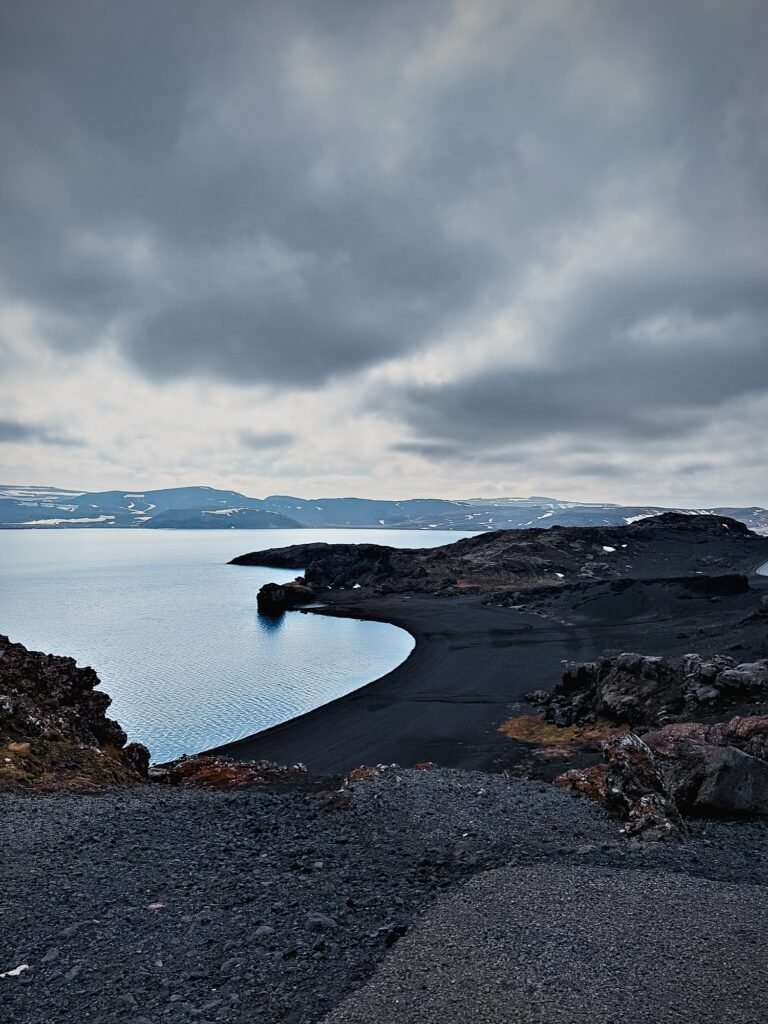
And sometimes those random places were just as interesting as where I was actually going.
There weren’t always signs telling me something was worth seeing. Sometimes there wasn’t even a name for the place. It was just something I noticed while driving.
That’s where the whole open-world comparison really started making sense to me.
You know when you’re playing a game, heading toward an objective, and something off in the distance catches your attention? Next thing you know, you’re going in a completely different direction because you want to see what’s over there.
That’s what driving through Iceland felt like.
Except instead of playing a game, I was doing it in a rental car with a camera and a drone.
It was one of those places where the journey really could be just as interesting as the destination.
“Standing Between Two Continents.” Sure.
One of my stops was Þingvellir National Park.
This is where you can supposedly stand between North America and Europe.
Now, before anybody comes for me, yes, I understand the geology.
Iceland sits along the boundary between the North American and Eurasian tectonic plates. At Þingvellir, you can walk through a rift valley created by those plates pulling apart.
Technically, that means you’re walking between two continental plates.
But I’m sorry, when somebody tells me I can stand between two continents, I’m picturing something a little different.
I’m still standing on one island. It’s still Iceland. The actual continents are separated by an ocean.
So personally, I think somebody did a pretty good job marketing that whole experience.
But regardless of what you want to call it, the park itself was worth visiting.
You walk through these enormous rock formations with towering walls on either side. There are cracks running through the landscape, uneven pathways, and stretches of open land surrounded by volcanic rock.
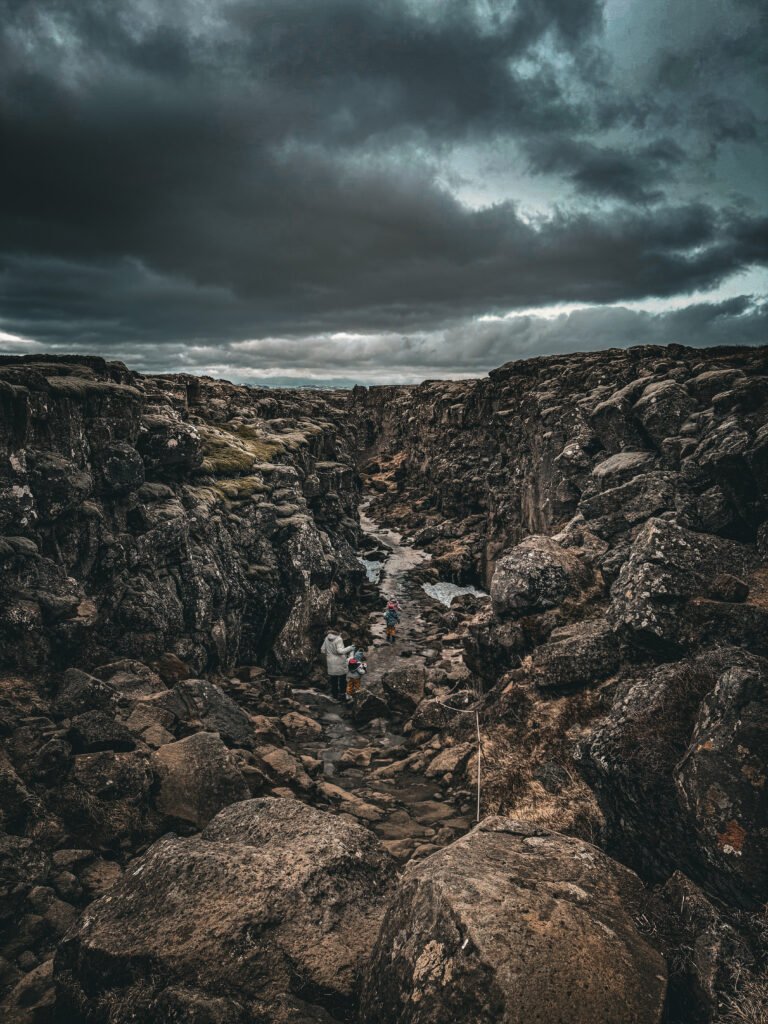
It looks like the ground split apart and everybody just decided to leave it that way.
And then, because this is Iceland, there’s a waterfall.
Öxarárfoss sits among the rock formations, and you can walk through the park to reach it.
It wasn’t the biggest waterfall I visited, but I liked the setting. The surrounding cliffs made it a great place to photograph.
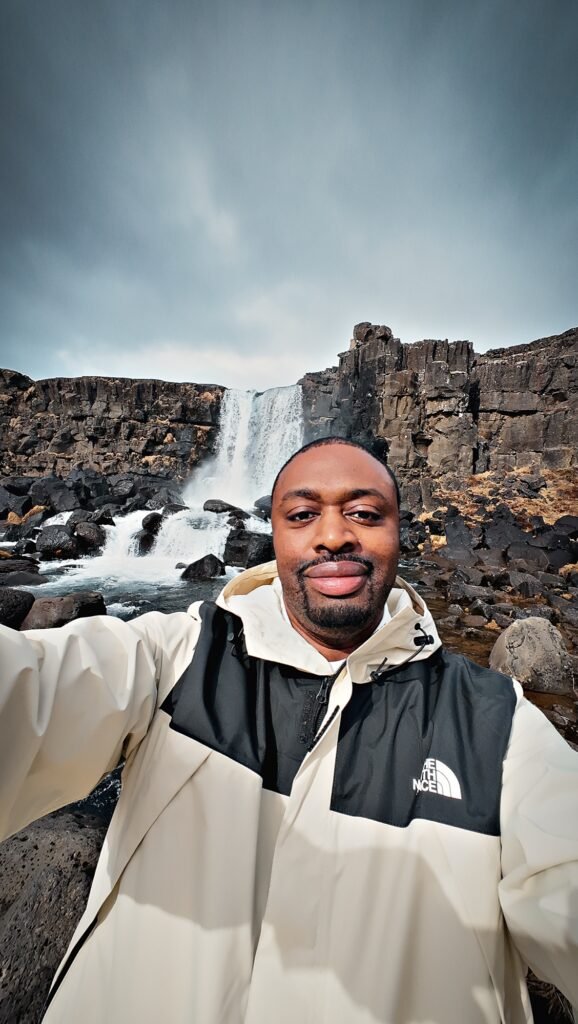
So whether or not I buy the whole “standing between two continents” thing, Þingvellir was still a good stop.
Geysir: Waiting for the Ground to Erupt
Next was the Geysir geothermal area.
This was something completely different from the mountains and waterfalls I’d been seeing.
The ground is steaming, water is bubbling, and there are people standing around waiting for a geyser to erupt.
And that’s basically the experience.
You stand there, watch the water, and wait.
Eventually, the water shoots into the air, steam rises everywhere, and everybody gets the show they came to see.
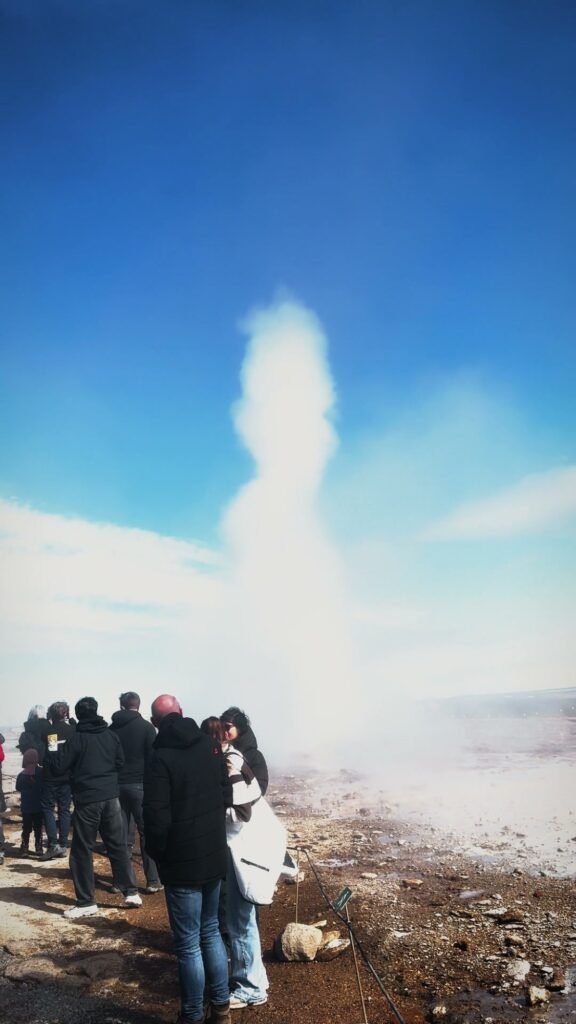
Then it’s over, and people start waiting for the next eruption.
I thought it was pretty cool.
It’s not something you see every day, and watching water suddenly shoot out of the ground is definitely worth stopping for.
But the next attraction ended up being one of my favorites from the entire trip.
Gullfoss: My Favorite Waterfall in Iceland
By the time I reached Gullfoss, this was probably my third waterfall of the trip.
But the views here made it my favorite.
The first thing I noticed was the wind.
The wind was crazy.
There were points where I could barely hear anything because it was so loud. Trying to walk around, take pictures, and enjoy the scenery while dealing with that wind was an experience by itself.
But you can’t beat the views.
What I liked most about Gullfoss was how different everything looked depending on where you stood.
From one viewpoint, you can see this enormous stretch of water flowing across the landscape. Move to another spot, and you can watch it drop into the canyon below.
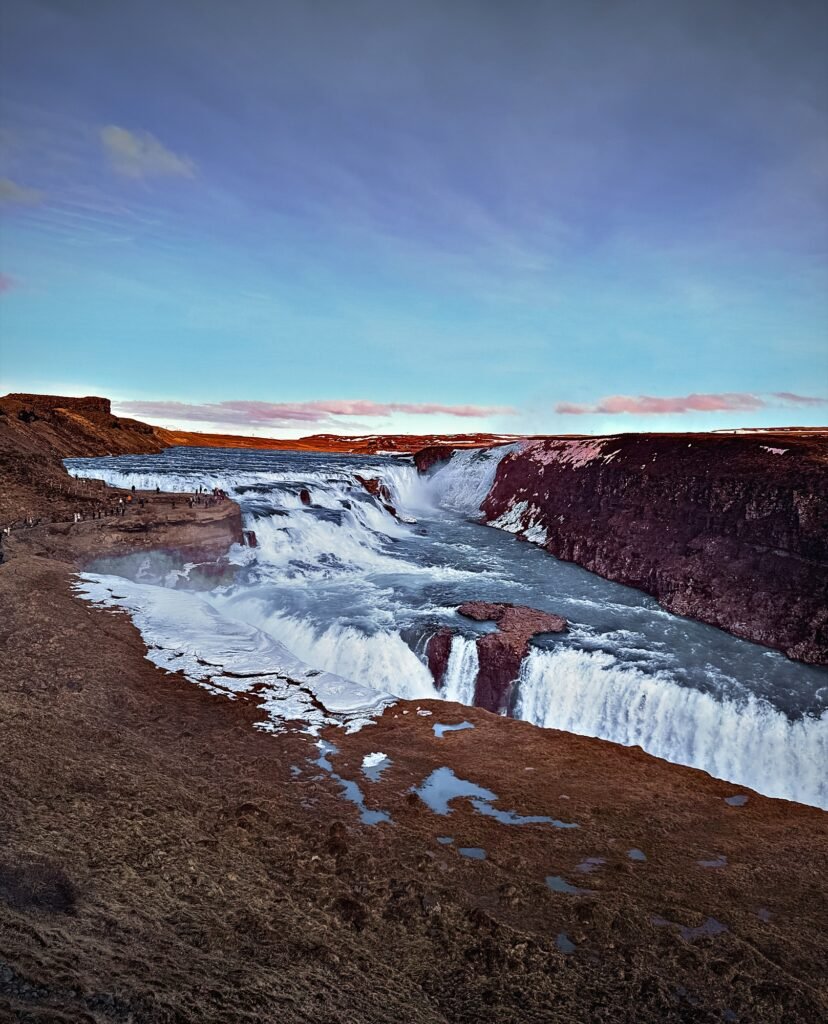
There were multiple places to stop and photograph the waterfall, and each one gave me something different.
That’s what made it stand out.
It wasn’t just the waterfall. It was the entire landscape surrounding it.
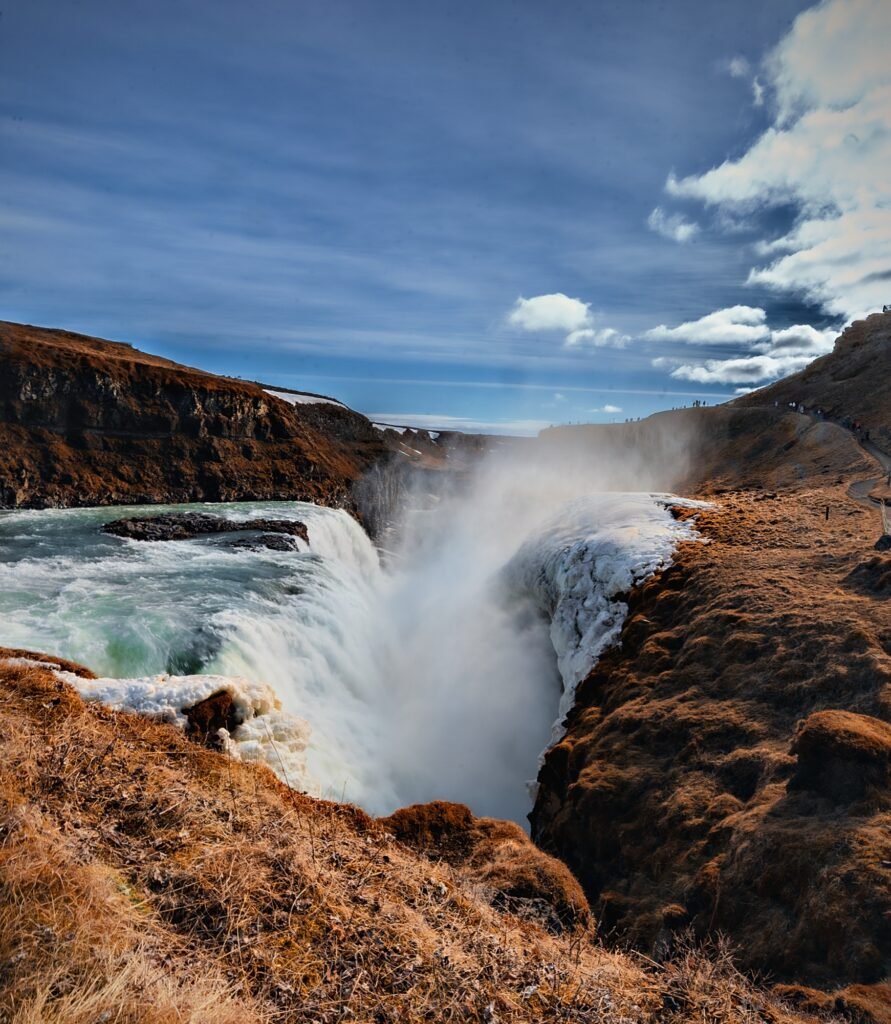
I could’ve spent a lot more time there with my camera.
The wind probably would’ve had something to say about that, though.
Whale Watching in Reykjavík: What I Actually Experienced
I also booked a whale-watching tour out of Reykjavík.
Now, somewhere in my mind, I apparently had this idea that I was going to see whales jumping out of the ocean.
You know, Free Willy.
Giant whales launching themselves into the air. Huge splashes. Something dramatic.
That’s not exactly how whale watching works.
A lot of it is just being on a boat, looking out across the water, and waiting for something to appear.
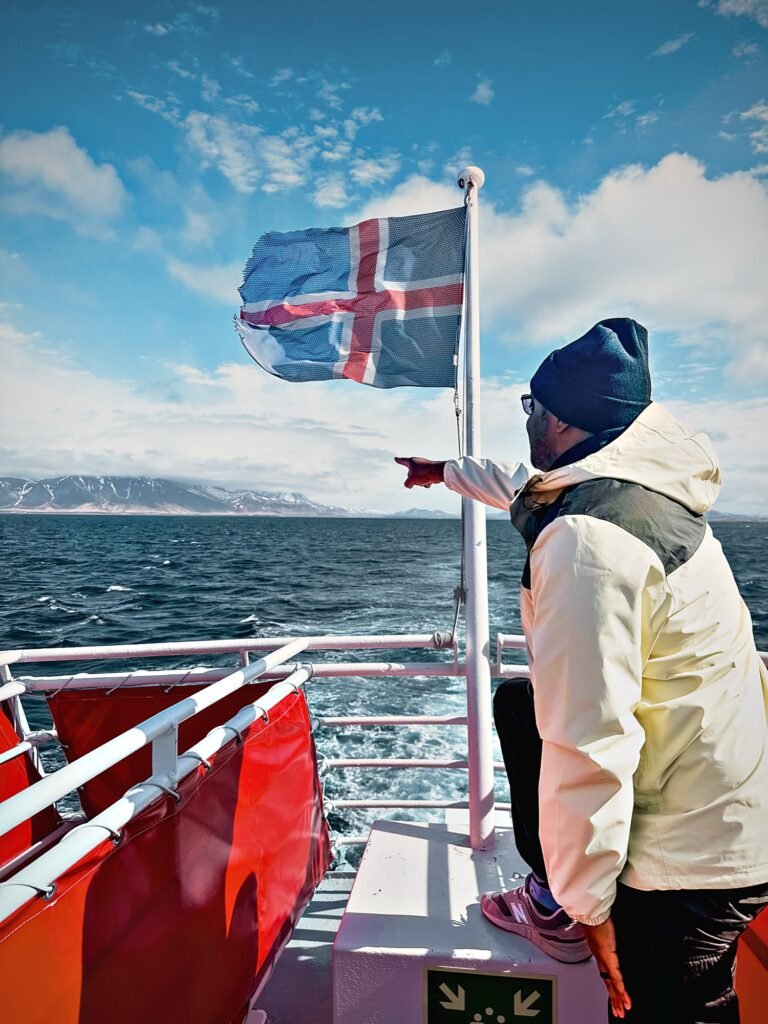
Somebody spots something in the distance, everybody turns to look, and you’re hoping to get a good view before whatever you’re watching disappears beneath the surface again.
It’s a lot more subtle than what you see in the movies.
The crew helped make the experience entertaining, and being out on the water was nice.
But I definitely had to adjust my expectations.
That’s the thing about wildlife experiences. You can’t exactly tell the animals what to do or when to show up.
Would I try whale watching again? Probably.
But next time, I’m not going out there expecting a scene from a movie.
Reykjavík: Where I Stayed, Not Where I Spent My Trip
For this trip, my hotel was in Reykjavík.
Every morning, I’d leave the hotel, get in my rental car, and head toward the mountains, waterfalls, or whatever attraction I had planned for that day.
Then, after spending most of the day driving and exploring, I’d make my way back to the city.
That was pretty much my routine.
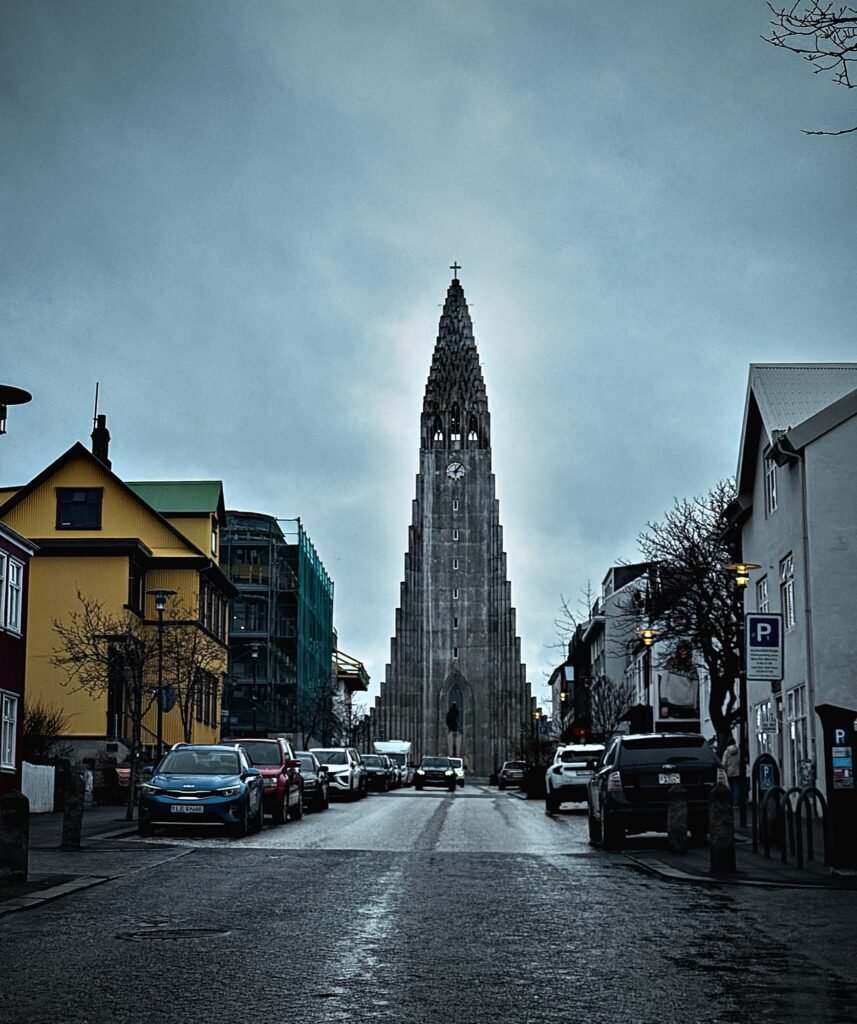
I got to see some of Reykjavík along the way. Harpa, the concert hall near the waterfront, caught my attention because of its glass exterior and interesting architecture.
But I wasn’t really there to explore the city.
I was there for the landscapes outside it.
And looking back, that’s probably the biggest thing I’d change about where I stayed.
Reykjavík makes sense if you’re planning to explore the city, enjoy the restaurants, or spend time doing activities nearby.
But if your whole trip is going to involve driving out to waterfalls, mountains, and other attractions, I’d recommend looking for accommodations closer to the areas you actually plan to visit.
There’s nothing wrong with staying in Reykjavík. I just don’t think it made the most sense for the kind of trip I was taking.
I spent a lot of time driving back and forth when I could’ve been staying closer to the places I wanted to photograph.
Especially when you’re already spending most of your day outside.
The South Coast: More Waterfalls, More Photography
If there’s one thing Iceland has plenty of, it’s waterfalls.
And on the South Coast, I visited two more that gave me completely different experiences.
The first was Seljalandsfoss.
What makes this one interesting is that you can actually walk behind the waterfall.
Normally, you’re standing in front of a waterfall, looking for a good place to take pictures.
Here, you can walk around it and see everything from behind the water.
And that gives you a completely different perspective.
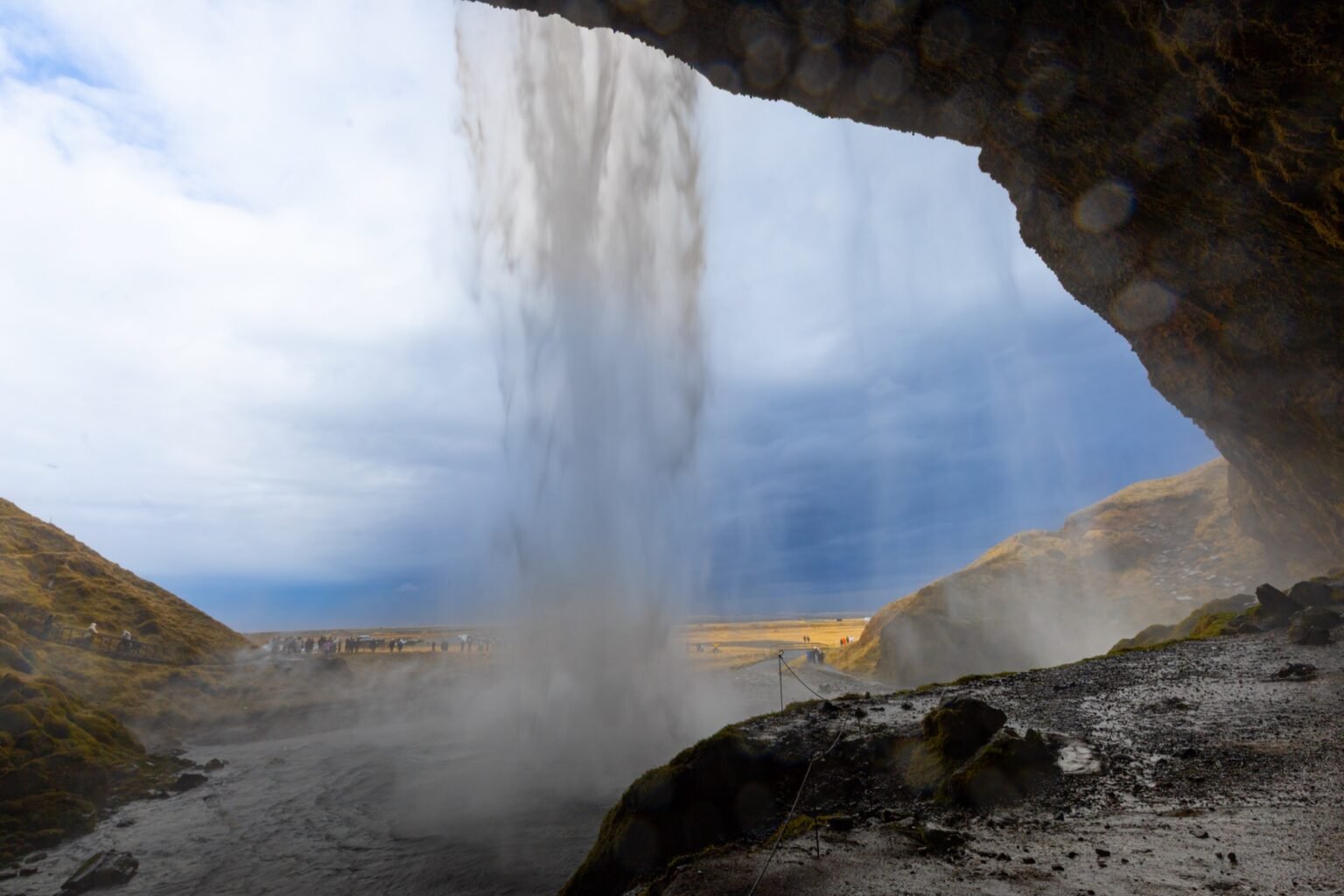
I enjoyed photographing this one because there were so many ways to frame the waterfall and surrounding landscape.
Then there was Skógafoss.
This one was a massive wall of water falling straight down.
You don’t walk behind it like Seljalandsfoss. You stand in front of it, and the closer you get, the more you appreciate how big it is.
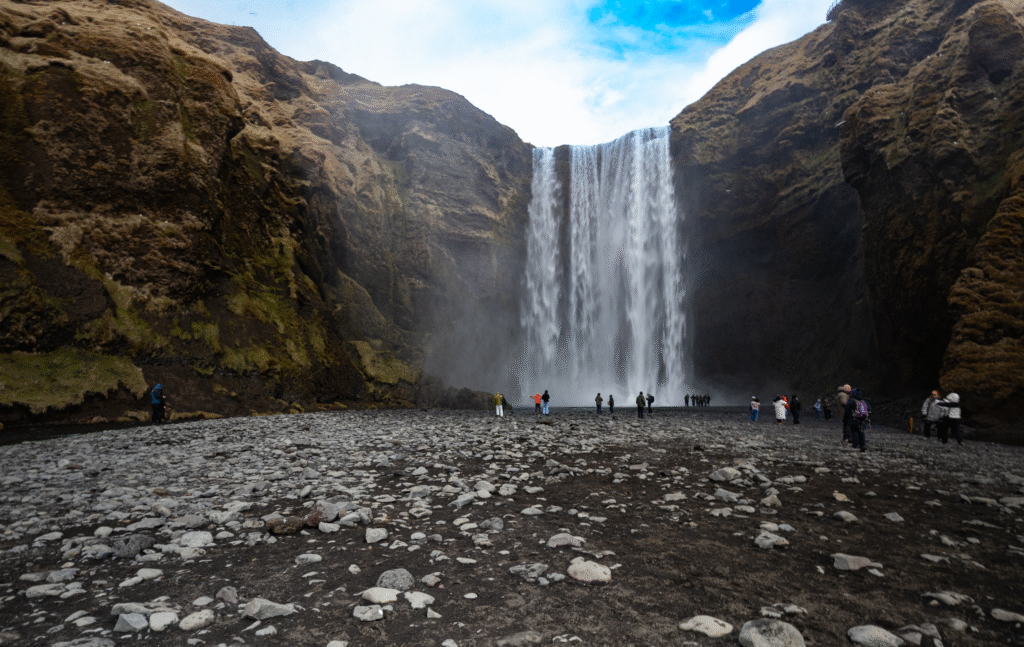
From a photography standpoint, I liked both.
Seljalandsfoss gave me some interesting compositions from behind the waterfall, while Skógafoss was great for showing scale.
And these are the kinds of places where traveling solo becomes a little inconvenient.
I can take pictures of the landscape all day, but getting myself into the shot is a different story.
You have to set up the tripod, figure out the composition, start the camera, walk into position, and hope everything looks good.
Sometimes it works.
Sometimes you end up doing the same thing five times.
But I managed to get some shots I was happy with.
And that’s really what I wanted out of the South Coast.
Black Sand Beach: The Part the Travel Videos Leave Out
One of the places I was looking forward to photographing was Reynisfjara, Iceland’s famous black-sand beach.
I’d seen plenty of pictures and videos before the trip.
Black sand, enormous basalt rock formations, dramatic cliffs, and waves crashing along the shoreline.
It looked like a great place to get some cinematic footage.
And for whatever reason, I guess I thought the weather was going to cooperate.
Maybe a little wind. Some clouds. Nothing too crazy.
Then I got there and remembered something pretty important.
I was in Iceland.
In April.
Of course it was freezing cold.
It was raining, windy, and extremely cold. Not exactly the beach experience you imagine when you’re looking at travel videos online.
And that’s something you don’t really think about when you’re watching somebody else’s footage.
You see the dramatic cliffs, the waves, and the black sand. You don’t feel the wind hitting you in the face while you’re trying to hold your camera steady.
But I wasn’t leaving without getting some good shots.
And looking back at the footage, I’m glad I stayed.
The dark sand, cloudy skies, rough water, and rock formations gave everything a really moody look.
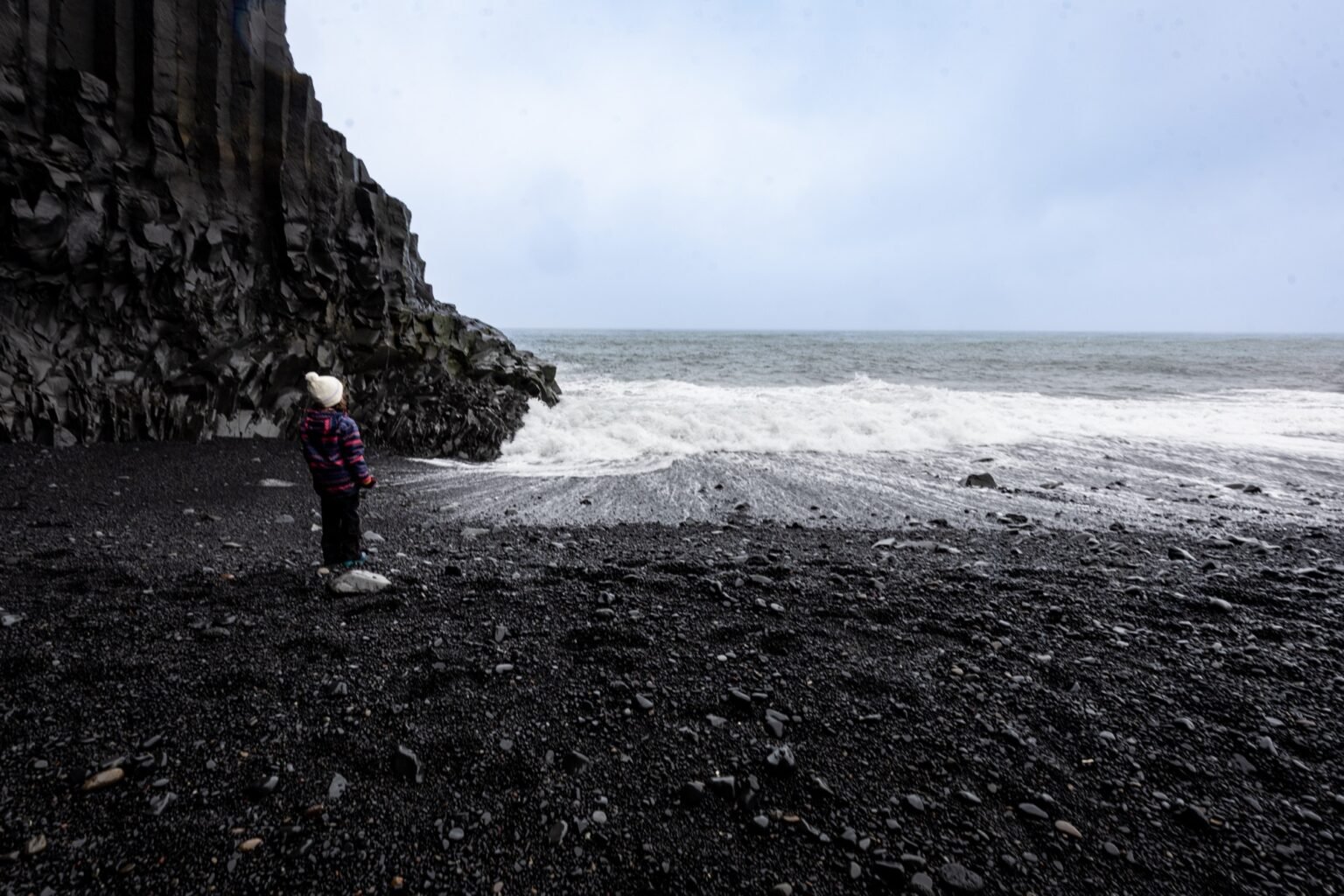
I got some good pictures and video, and I think they came out pretty cinematic.
So it was worth it.
Would I have preferred better weather?
Absolutely.
But I can’t complain too much about how the shots turned out.
A Few Things Worth Knowing Before You Go
If you’re planning a trip to Iceland, there are a few things I’d recommend based on my experience.
Rent a car.
This is probably my biggest recommendation, especially if you’re visiting Iceland to explore the landscape.
Having my own car meant I could stop whenever I saw something interesting, change my plans, and spend as much time as I wanted at different locations.
For me, that freedom was one of the best parts of the trip.
Stay closer to the places you actually want to visit.
If you’re planning to explore Reykjavík, stay in Reykjavík.
But if your itinerary is mostly waterfalls, mountains, and attractions outside the city, look for accommodations closer to those areas.
I wouldn’t spend the entire trip commuting back and forth from the city again.
If you’re bringing a drone, handle the permits before you travel.
Iceland has restrictions on drone flying, particularly around national parks and protected natural areas.
Check the rules for the specific places you plan to visit, apply for any required permits in advance, and don’t assume that because an area is wide open, you’re allowed to fly there.
If photography is the priority, plan the trip around photography.
There’s a difference between going somewhere to see the attractions and going somewhere to photograph them.
If you’re there primarily to take pictures or create video, give yourself enough time at each location.
Think about the lighting, weather, and the types of shots you’re trying to get. Don’t schedule so many attractions that you’re constantly rushing from one place to another.
You can see a lot of Iceland in a few days, but creating the kind of photography and video you actually want takes time.
And finally, don’t underestimate the weather.
Especially if you’re traveling outside the summer months.
Bring clothes that can handle rain, wind, and cold temperatures. A place that looks beautiful in photographs can feel very different when you’re actually standing there.
My Take: Iceland Is a Blank Canvas
I’ve traveled to a lot of places, and one of the things I enjoy most is seeing how different parts of the world look and operate.
Some places stand out because of their cities.
Others because of the architecture, food, people, or lifestyle.
Iceland stood out because of the landscape.
There were so many places where I’d look around and wonder what somebody could build there.
A shopping center? A resort? Some kind of attraction?
Coming from a place where almost every stretch of land seems to have something built on it, seeing that much open space was unusual.
And that’s where the city-building game comparison came from.
You know when you start a new game and you’ve got all this untouched land? You’re looking around, figuring out where everything could go, and imagining what the place might look like once you start developing it.
That’s what some parts of Iceland reminded me of.
It almost looked like somebody had created the landscape and hadn’t gotten around to building anything on it yet.
But the more I drove around, the more I appreciated seeing it exactly the way it was.
Just mountains, rocks, moss, water, and miles of open land.
The Blue Lagoon surprised me because I ended up enjoying it a lot more than I expected.
Gullfoss became my favorite waterfall, even with the wind.
Whale watching wasn’t exactly what I imagined.
And Black Sand Beach reminded me that some of the best-looking travel footage comes from conditions that aren’t necessarily enjoyable to stand in.
But the thing I’ll remember most about Iceland is how much I enjoyed exploring.
Getting in the car, picking a destination, and finding something interesting along the way.
Not everything needed to be a famous attraction. Sometimes I just wanted to pull over and photograph whatever caught my attention.
And even after everything I saw, there’s still a lot of Iceland I haven’t explored.
Glaciers, ice caves, snowmobiling, and hopefully the Northern Lights are all things I’d like to experience.
So I’m definitely planning to go back.
Iceland is one of those places where I feel like I’ve barely scratched the surface.
And that’s probably what I enjoyed about it most.
Travel Graham | The Good Life